
IVF with donor embryos
In vitro fertilisation (IVF) with donor embryos can offer another path to parenthood when treatment using your own eggs or sperm isn’t possible, or when previous treatment hasn’t led to pregnancy. At Bourn Hall, we’ll explain what donor embryo treatment involves and help you explore your options, so you can make the decision that feels right for your future family.

Page Guide
We understand that fertility treatment can be a complex and emotional journey. Our team is dedicated to providing you with all the information and support you need throughout the process.
How it works

What is IVF with donor embryos?
IVF with donor embryos is a fertility treatment in which an embryo created using donated eggs and donated sperm is transferred to the womb.
The embryo may have been donated by people who have completed their own fertility treatment and chosen to help someone else build a family. This means the child would not be genetically related to the person or couple having treatment, but the person who carries the pregnancy would experience pregnancy and give birth to the baby.
Why might I need IVF with donor embryos?
You may consider IVF with donor embryos if:
- Creating embryos with your own eggs or sperm isn’t possible
- Previous fertility treatment hasn’t resulted in pregnancy
- There’s a known genetic concern that could be passed on to a child
- You’ve been through a long or complex fertility journey and are considering another option
Embryo donation treatment can bring up both practical and emotional questions. At Bourn Hall, we’ll provide compassionate guidance and specialist counselling, helping you understand what this path could mean for you and your future family.
Legal advice may be needed in some situations, including for single patients, same-sex couples and families where one partner is trans, with or without a Gender Recognition Certificate. Your Bourn Hall team will talk this through with you and let you know if independent legal advice may be helpful before treatment begins.
Your journey begins with a consultation at Bourn Hall. We’ll talk through your fertility, explain how IVF with donor embryos works and answer any questions you may have.
This is also an opportunity to discuss what embryo donation treatment could mean for you emotionally, medically and practically.
Before treatment can go ahead, you’ll be offered specialist counselling to help you explore the implications of using donor embryos.
Everyone’s feelings about donor conception are different, and counselling provides a safe, supportive space to discuss topics such as:
- Future family conversations
- Donor information
- How and when you might talk to your child about their conception
We’ll also explain the consent process before treatment begins, so you understand each decision clearly.
Once you’re ready to move forward, we’ll talk you through the donor embryo matching and allocation process.
Our team will explain what information can be shared, what remains confidential and how donor embryo treatment is managed within UK law.
Before embryo transfer, your womb lining needs to be prepared to help create the right conditions for implantation. This usually involves medication and monitoring, so we can check how your body is responding.
We’ll let you know what to expect at each appointment and make sure you feel supported throughout your preparation cycle.
When the timing is right, the donor embryo is transferred into the womb. The procedure is usually quick and doesn’t normally require sedation.
After your embryo transfer, we’ll explain what happens next, including when to take a pregnancy test. We’ll also be here to answer questions and provide guidance during the two-week waiting period, which many people find to be an emotional part of treatment.
Emotional considerations of IVF with donor embryos
Choosing IVF with donor embryos can feel hopeful, but it can also bring up complex emotions. You may be thinking about genetic connection, your previous fertility experiences, how treatment could affect your future family and what this path means for you personally.
Many people experience a mix of emotions as they consider donor embryo treatment. Some feel ready to move forward quickly, while others need more time to reflect on their options. Whatever you’re feeling, it’s important to have the information and support needed to make decisions at your own pace.
Counselling is a key part of embryo donation treatment. It gives you a safe space to talk through your thoughts, ask questions and explore future conversations with any child born through donor embryo IVF. These discussions can help you feel more prepared, not only for treatment itself, but for the years that follow.


What happens next
What are the laws around IVF with donor embryos?
In the UK, IVF with donor embryos must take place at a clinic licensed by the Human Fertilisation and Embryology Authority (HFEA). This helps ensure treatment is carried out safely, ethically and within clear legal framework.
Before treatment begins, we’ll guide you through the consent process, explaining important decisions about donor embryos, legal parenthood and the information that may be available to any child born through treatment.
If you have treatment at a licensed UK fertility clinic, the embryo donors won’t have legal rights or responsibilities for any child born as a result of treatment. The person who gives birth is always the child’s legal mother. If you have a partner or co-parent, your clinic will explain any consent requirements needed to establish legal parenthood.
In some situations, legal advice may be needed before treatment begins. This can include single patients, same-sex couples and families where one partner is trans, with or without a Gender Recognition Certificate. We’ll talk this through with you sensitively and explain when independent legal advice may be helpful.
Donor embryo treatment in the UK is no longer anonymous in the way it once was. Donor-conceived people can apply for identifying information about their donor when they turn 18. We’ll explain what this means before treatment begins, so you can move forward with clarity and confidence.
Begin with guidance you can trust
For many people, donor embryo treatment comes after a long and often challenging fertility journey. At Bourn Hall, we’ll help you understand the treatment, the legal implications and the emotional considerations involved, so you feel prepared for the decisions ahead.
Flexible Pricing Options
To help make your treatment affordable and achievable, we offer fixed price treatment package options and a variety of finance solutions for patients looking to spread all or part of the cost of their treatment.
Explore our prices
Discover our prices and finance options, making treatments more accessible for you.
Book a 15 minute Discovery call
Schedule a Discovery call to find out which tests and treatments are right for you.
Fertility funding partners we work with:


Our IVF success rates
At Bourn Hall, you can be assured of the best chances of having a baby within the shortest possible time. If you are under 35, you have a 72% chance of falling pregnant within one year.
*Data from 2025
If you are under 35, you have a 72% chance of falling pregnant within one year.
If you are 35-37 years old and you continue treatment with Bourn Hall, you have a 64% chance of getting pregnant within one year.
If you are a female aged over 40 and you continue treatment with Bourn Hall, you have about a 50% chance of getting pregnant within one year.
Success rates by age
At Bourn Hall, you can be assured of the best chances of having a baby within the shortest possible time. If you are under 35, you have a 72% chance of falling pregnant within one year.
*Data from 2025

Younger than 35
If you are under 35, you have a 72% chance of falling pregnant within one year.

35 to 39 years old
If you are 35-37 years old and you continue treatment with Bourn Hall, you have a 64% (58% for 38-39 year olds) chance of getting pregnant (pregnancy seen on scan) within one year.

40+ years old
If you are a female over 40 and you continue treatment with Bourn Hall, you have about a 50% chance of getting pregnant within one year.
Support at every stage
As one of the UK’s top fertility treatment centres, our values ensure we put our patients first.

Passion

Adaptability

Commitment

Teamwork and Collaboration
Our fertility milestones

1978
The world's first IVF baby

1980
Year founded by IVF pioneers

25000
Babies born through Bourn Hall

Patient reviews
Genuine experiences from real patients. See why so many trust us with their fertility care.

“We went to an open evening at Bourn Hall Wickford and came away feeling really positive about the place. The staff were really friendly and the presentation was clear about the statistics regarding success rates and live birth rates; their data was very transparent. We came away feeling like we would really be looked after.”
Katy and Leigh are parents to Charlie after IVF
Patient 2023
“We chose to make an appointment at Bourn Hall Wickford because of the favourable reviews. When we got there and met the staff they were just so lovely, making us feel welcome and explaining to us what tests would need to be done and what our options were; we just thought ‘yes, let’s get the ball rolling!”
Jess and Fran are mums to Nathan after IVF with donor sperm
Patient 2023
Patient stories
Our patients are at the heart of everything we do, and we are always inspired by the success stories they have to share. Hear directly from our previous patients as they share their unique journeys to parenthood.
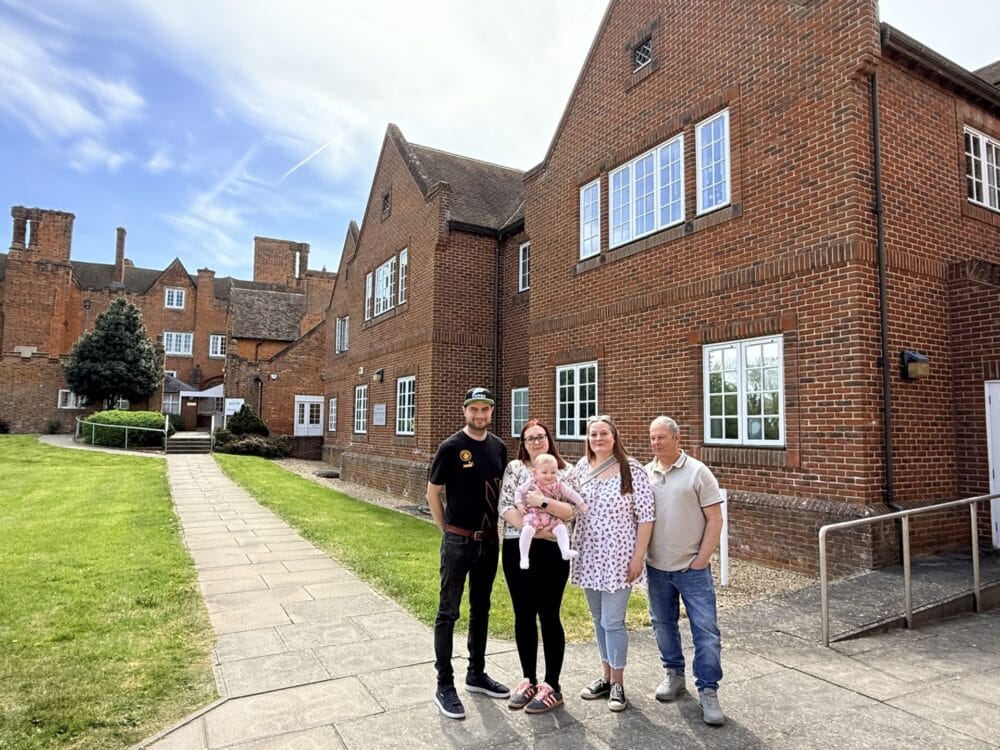
April & Giacomo’s Fertility Journey: Overcoming Male Factor Infertility Challenges
April and Giacomo’s journey to parenthood was filled with uncertainty, waiting, and emotional challenges, but throughout it…

From Challenges to Joy
Every fertility journey is different, and for Kim and her husband, the path to parenthood brought both…

Sophie’s Journey to Motherhood: Becoming a Solo Mum with Donor Treatment
At Bourn Hall, we’re privileged to support people on every path to parenthood. Today, we’re sharing Sophie’s…
Upcoming fertility events
Join our experts at a range of events including support groups, webinars and open evenings.
Learn more about the options available to you, from fertility tests to treatments, and find answers to any questions you might have.






Related information
If you qualify for NHS-funded fertility treatment under the NHS Norfolk and Waveney Integrated Care Board, our fertility diagnostic pathway is the same as the services offered by your local NHS hospital but with much shorter waiting times and in an environment dedicated to fertility services.
Our male couples fertility testing package includes semen analysis tests for you both, a free 30-minute consultation with our fertility nutritionist and a private consultation.
We offer fertility health and wellbeing packages at our clinics in Cambridge, Norwich, Wickford, or at home. Our male package includes a semen analysis, a free 30-minute consultation with our fertility nutritionist, and personalised doctor-written report explaining your results.
Our female couples fertility testing package includes options to provide you both with results on your fertility. These include AMH blood tests for ovarian reserve; TSH to assess your thyroid stimulating hormone; an ultrasound scan; and personalised doctor-written report explaining your results.
Our female package includes the option of AMH blood tests for ovarian reserve; TSH to assess your thyroid stimulating hormone, an ultrasound scan; and personalised doctor-written report explaining your results. Additionally, we include a free 30-minute consultation with our fertility nutritionist to provide you with nutrition and lifestyle advice.
For heterosexual couples, our female and male fertility testing package includes the option of semen analysis; AMH blood tests for ovarian reserve; TSH to assess your thyroid stimulating hormone; ultrasound scan; and personalised doctor-written report explaining your results.
Once you’ve made the decision to extend your family, even thinking that you might have a fertility issue can be stressful. And for a man, the thought that your sperm might not be in tip-top condition is definitely a cause for concern.
Frequently asked questions
Your questions answered. Find clarity on every step of your fertility journey.
Success rates vary depending on factors such as embryo quality, the age of the egg donor when the embryo was created and your individual health and fertility history. During your consultation, your specialist will explain what may affect your treatment outcomes and answer any questions you may have.
A child born through donor embryo IVF won’t be genetically related to the person or couple having treatment. However, the person who carries the pregnancy will experience the pregnancy and give birth to the baby.
The cost of donor embryo IVF depends on your treatment plan, medication requirements and any additional support needed. Before treatment starts, you’ll receive a clear breakdown of the costs involved so you can make informed decisions about your care.
The timeframe varies from person to person. Factors such as embryo availability, matching, counselling, consent and your preparation cycle can all affect how long the process takes. Your team will keep you updated at each stage and provide a clearer timeline once your treatment plan is in place.
Yes. Donor embryos are created using eggs and sperm from donors who have undergone screening in line with UK fertility regulations. We’ll discuss details about donor screening and the medical information available before your treatment begins.