
Heterosexual Couples
Deciding to grow your family is a big step, and it can be really stressful if things don’t go as smoothly as you hoped. If you and your partner are trying to have a baby but it’s taking longer than expected, or if you've experienced more than one miscarriage, it might be worth exploring your fertility options.
Looking into fertility testing and treatments is a natural next step, and with so much information available, we're here to make it as simple as possible

Starting your fertility journey
Preparation for treatment and fertility testing options
There are numerous reasons why some couples have difficulty conceiving. At Bourn Hall, we offer preparation for treatment packages which includes a consultation and preparing a personalised treatment plan for you.
Fertility testing delivers answers and can help reassure you and give you the peace of mind that you deserve.
We have a number of tests available to help you discover if you or your partner have any fertility issues, and even if the results aren’t what you were hoping for, they can serve as a guide to help you identify the appropriate next step on your fertility journey.
A simple blood test that measures AMH, a hormone produced by egg sacs (follicles – structures that could contain eggs). The AMH test won’t confirm if a woman is fertile, but it will indicate potential ‘ovarian reserve’ or ‘egg stores’.
A painless internal scan that assesses female reproductive health by checking the uterus and ovaries. It can also identify how many immature follicles are present in the ovaries to give an estimation of egg stock levels.
A good (not definitive) assessment of male fertility. A sample of semen is collected either at home or in a private space at the clinic. The sample is then analysed and the sperm are judged on their number, movement and shape. Any abnormality in one of these criteria could mean that fertility potential is reduced.
The test measures antibodies against thyroid peroxidase, an enzyme the thyroid gland uses to produce thyroid hormones. Elevated TPO antibodies may indicate that the immune system is attacking the thyroid.
The TSH test measures the level of thyroid-stimulating hormone in the blood. TSH is produced by the pituitary gland and regulates how much thyroid hormone (T3 and T4) the thyroid gland produces. TSH is the primary screening test for thyroid function. It helps identify whether the thyroid is:
* Underactive (hypothyroidism)
* Overactive (hyperthyroidism)
* Functioning normally (euthyroid)
+ 60 minute consultant consultation – Tailored advice about fertility options that are appropriate to you with one of our highly specialised experienced fertility doctors, delivered either in person or virtually
| Assessment type | Assessment method | Prep for Treatment |
|---|---|---|
| Semen analysis | Microscopic analysis of semen samples | |
| AMH Blood test | Assessment of your ovarian reserve | |
| TSH Blood test | Assessment of your thyroid stimulating hormone | |
| Anti TPO blood test | Measures antibodies against thyroid peroxidase | |
| Free 30-minute nutrition consultation | Appointment with nutritionist | |
| Free 60-minute nutrition consultation | Appointment with nutritionist | |
| Pelvic scan | Trans-vaginal ultrasound scan | |
| Fertility Consultation | Consult with fertility specialist | |
| Personalised doctor-written report | Analysis by fertility specialist | |
| £715 |

Fertility treatments
Fertility treatments aim to help you and your partner realise your dreams of having a baby. Depending on the results of your fertility tests, a number of options could be suitable for you and your partner.
Private IVF treatment
A treatment where eggs are fertilised by sperm in a lab, then transferred to the womb, offering hope to individuals or couples facing difficulties conceiving naturally.
Intracytoplasmic Sperm Injection (ICSI)
Sometimes conventional IVF needs a helping hand. Intracytoplasmic Sperm Injection (ICSI) is a lab technique that may be appropriate for you, if your sperm needs a bit of extra help to achieve successful fertilisation.
Intrauterine Insemination (IUI)
A fertility treatment where sperm is placed directly into the womb during ovulation, helping to increase the likelihood of sperm reaching and fertilising an egg.
IVF with PGT-A
A screening method used during IVF to check embryos for chromosomal abnormalities, helping to select the healthiest embryos for transfer, enhancing the chances of a successful pregnancy.
Donor fertility treatment
Assisted reproductive treatments that involve the use of donated sperm, eggs, or embryos to help individuals or couples achieve pregnancy when using their own may not be possible.
Private IVF surrogacy in the UK
In some cases, potential parents need the help of another person to carry and deliver their baby for them – a process known as surrogacy.
Specialist services

Andrology
Our dedicated andrology clinic offers a number of fertility investigations, treatments and preservation methods that are designed

Donor Programme
Having IVF treatment with donor eggs or sperm at one of our East of England clinics could
Endometriosis clinic
Bourn Hall has developed a tailored service to address the unique needs of those women with endometriosis

Fertility Health and Wellbeing
For most people, fertility health and wellbeing will never be an issue. Around 80% of people trying

Recurrent miscarriage clinic
Investigating and overcoming early pregnancy loss after natural conception or after fertility treatment.

Surrogacy
In some cases, potential parents need the help of another person to carry and deliver their baby
Fertility preservation options
Preserving your fertility gives you options. If you may want a child in the future but need to undergo a treatment that could make this difficult, fertility preservation could be for you.
Egg freezing
A process where eggs are collected and preserved through freezing, allowing individuals to store healthy eggs for future use, offering flexibility and reassurance for those wishing to delay pregnancy.
Embryo freezing
A process where embryos, created through IVF, are frozen and stored, allowing couples or individuals the chance to use them for future attempts at pregnancy when the timing feels right.
Sperm freezing
A method where sperm is collected, frozen, and stored for future use, giving individuals the option to preserve their fertility, often before medical treatments or for family planning.
Flexible Pricing Options
To help make your treatment affordable and achievable, we offer fixed price treatment package options and a variety of finance solutions for patients looking to spread all or part of the cost of their treatment.
Explore our prices
Discover our prices and finance options, making treatments more accessible for you.
Book a 15 minute Discovery call
Schedule a Discovery call to find out which tests and treatments are right for you.
Fertility funding partners we work with:


We’re incredibly proud of our success rates
At Bourn Hall, you can be assured of the best chances of having a baby within the shortest possible time. If you are under 35, you have a 72% chance of falling pregnant within one year.
*Data from 2025

Younger than 35
If you are under 35, you have a 72% chance of falling pregnant within one year.

35 to 39 years old
If you are 35-37 years old and you continue treatment with Bourn Hall, you have a 64% (58% for 38-39 year olds) chance of getting pregnant (pregnancy seen on scan) within one year.

40+ years old
If you are a female over 40 and you continue treatment with Bourn Hall, you have about a 50% chance of getting pregnant within one year.
Patient reviews
Genuine experiences from real patients. See why so many trust us with their fertility care.

“We went to an open evening at Bourn Hall Wickford and came away feeling really positive about the place. The staff were really friendly and the presentation was clear about the statistics regarding success rates and live birth rates; their data was very transparent. We came away feeling like we would really be looked after.”
Katy and Leigh are parents to Charlie after IVF
Patient 2023
“We chose to make an appointment at Bourn Hall Wickford because of the favourable reviews. When we got there and met the staff they were just so lovely, making us feel welcome and explaining to us what tests would need to be done and what our options were; we just thought ‘yes, let’s get the ball rolling!”
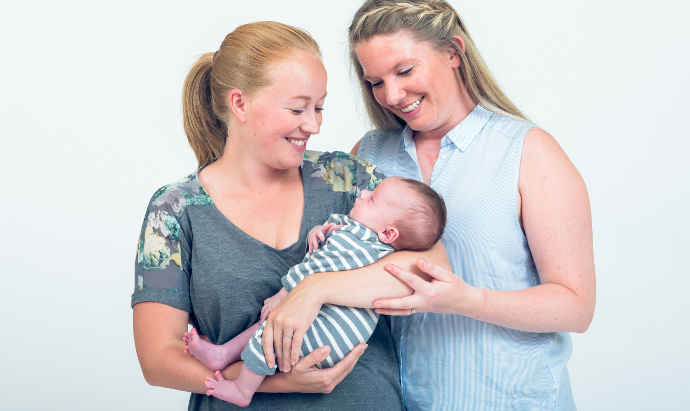
Jess and Fran are mums to Nathan after IVF with donor sperm
Patient 2023
Support at every stage
As one of the UK’s top fertility treatment centres, our values ensure we put our patients first.

Passion

Adaptability

Commitment

Teamwork and Collaboration
Our fertility milestones

1978
The world's first IVF baby

1980
Year founded by IVF pioneers

25000
Babies born through Bourn Hall

Upcoming fertility events
Join our experts at a range of events including support groups, webinars and open evenings.
Learn more about the options available to you, from fertility tests to treatments, and find answers to any questions you might have.






Frequently asked questions
Your questions answered. Find clarity on every step of your fertility journey.
First, we collect the eggs. To help with this process we use fertility drugs, which will stimulate your ovaries to create a number of eggs. Once you have produced some eggs, we harvest them with a minor surgical procedure. The collected eggs are then placed in a culture dish.
Next, we wash the semen – usually produced by masturbation – and, using a variety of techniques, select the best sperm. This then joins the egg in the culture and, over the next 18 hours or so, fertilisation occurs naturally.
After allowing a period of growth in culture, our skilled embryologists assess the developing cell structure of the delicate embryos under a microscope. One or two are then transferred to your uterus.
You can begin by joining one of our open events, where we share insights into our treatments, success rates and the support we offer.
The next step is to book a consultation with one of our fertility doctors. Together, we’ll review any test results you have, discuss your medical history and design a treatment plan tailored specifically to you.
If you haven’t had fertility tests yet, we’ll arrange these for you and update your plan once the results are available.
The cost of fertility treatment varies depending on the care you need. After your consultation, we’ll provide you with a personalised treatment plan that includes a full breakdown of all costs.
You can also visit our fees and funding page or use our fee calculator for an estimate tailored to your circumstances.
IVF, or in vitro fertilisation, is a treatment where eggs and sperm are brought together in a laboratory to create embryos. An embryo is then transferred into the womb to try to achieve pregnancy. IVF can help overcome a range of fertility challenges.
In the UK, you can receive NHS funding or IVF up to the age of 42 (if you meet other NHS criteria). However, as a private clinic, Bourn Hall do not impose the same restriction and we aim to support patients in their decision making process. Bourn Hall will not offer fresh IVF treatment using your own eggs if at the time of starting treatment, you are expected to be 45 years or older. If you are over this age, then please speak to us about other options such as IVF using donor eggs.
16 days after your egg collection, you can take a home pregnancy test. If your pregnancy test is negative after your IVF treatment, we will offer follow-up care and discuss your options to make sure you feel supported. Our fertility counsellors and our Patient Support Group are also on hand to support you throughout your journey with us.
You can resume treatment once you have had a menstrual cycle after the unsuccessful treatment.