
Donor Programme
Having IVF treatment with donor eggs or sperm at one of our East of England clinics, including those in Cambridge, Norwich and Wickford, could help you achieve your dreams of parenthood.

Become a Donor

Becoming a donor is an incredible way to help others create the family they’ve always dreamed of. In the UK, one in six couples face infertility challenges, and your generosity can offer them the chance to experience parenthood.
If you’re a woman aged 18-35, in good health, with no family history of hereditary illness, becoming an egg donor can make a life-changing difference. With a national shortage of donors, many women face long waits for treatment, and your donation could help make their dream of having a family come true.
For men, sperm donation is just as impactful. Men aged 18-45 in good health can help others start their family journey while receiving compensation for their time. Sperm-sharing is also available to reduce IVF costs while helping others achieve their dream of parenthood.
Becoming an egg donor can be a rewarding experience and is one of the most generous gifts you can give. The reasons someone becomes a donor vary, but one thing they all share is a desire to help others achieve their dream of having a child.
An estimated one in six IVF treatments involve egg donation – but there is a national shortage of egg donors. As a result, many women who need donor eggs face a stressful and anxious wait to become a parent before a suitable donor is found.
The gift of egg donation and egg-sharing can help make other people’s dreams of creating their own family come true.
There are many reasons why people decide to become a sperm donor, but one thing our donors all share is the desire to help others achieve their dream of a family.
Becoming a sperm donor is one of the most generous gifts you can give, and you will receive compensation of up to £45 per visit to the clinic, up to a maximum of £750.

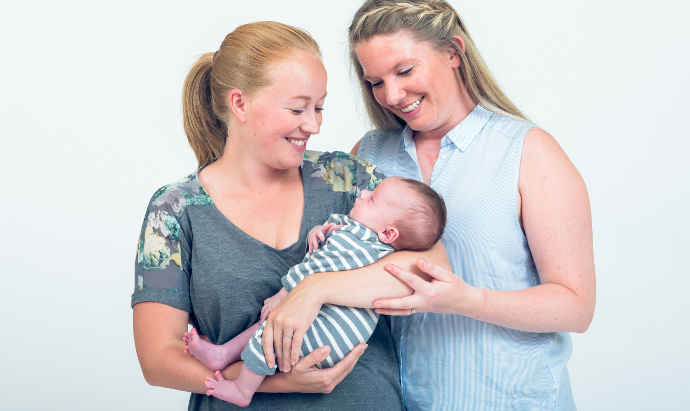
Bourn Hall are proud to offer the opportunity of Shared Motherhood, which is a wonderful way for you to share the experience of pregnancy as a couple, as well as have the option to help others create their very own family too.
The standard Shared Motherhood process involves both partners undergoing scans, appointments and a stimulation process, with one partner going through the IVF process to produce eggs. These are then fertilised with your donor’s sperm in the embryology laboratory, before the embryo is transferred into the womb of the other (female) partner to carry the pregnancy.
If you’re unsure about who will provide eggs and who will carry the pregnancy, we would advise both of you to have the following tests:
- Blood test to measure your ovarian reserve
- Blood tests to determine your thyroid levels
- Internal scan to check your uterus and ovaries.
Once you’ve both had positive results from these tests, you will have an extended consultation to discuss and plan your treatment.
Typically, treatment costs from £13,500, including donor sperm costs. We will provide you with a more detailed quote following your consultation.
If you would like to have treatment using your partner’s eggs, she would first need a blood test, followed by a consultation and screening tests.
Once accepted onto the programme, we charge a single, initial fee of £1,500.
This covers her preparation for treatment and the additional donor-screening tests that need to be undertaken to allow her to donate.
(In the unlikely event any of these tests exclude her from the programme, we are unable to refund this fee but will raise a credit note, which can be put towards further treatment as a fully self-funding patient).
You will need to pay your donor sperm costs and, if purchased from Bourn Hall, these are as follows:
Donor sperm reservation fee and first year’s storage for five vials – £420. (An annual storage fee of £420 after one year is applicable if any vials of donor sperm remain in storage on the anniversary of your reservation)
Donor sperm usage fee – £800.
There is also a partner transfer fee of £1,300 (to cover additional costs if you are receiving the embryo transfer as part of a shared motherhood arrangement).
All other elements of your treatment are free of charge.
These costs include up to one embryo transfer. For further frozen embryo transfers you would be charged at our normal FET package rate.
If you both want to egg-share, you will each be charged the £1,500 initial fee for your preparation for treatment, additional donor-screening tests, egg collection and medications, and the £1,300 partner transfer fee when you transfer your partner’s embryo.
You will need to pay your donor sperm costs and, if purchased from Bourn Hall, these are as follows:
- Donor sperm reservation fee and first year’s storage for five vials – £420. (An annual storage fee of £420 after one year is applicable if any vials of donor sperm remain in storage on the anniversary of your reservation)
- Donor sperm usage fee – £800.
All other elements of your treatment are then free of charge.
These costs include up to one embryo transfer each using your partner’s embryos. For any further frozen embryo transfers, you would be charged at our normal FET package rate.
If you would like to donate your eggs to other couples wanting to start a family, and your partner would like to egg-share, then you would both first need to have a blood test, followed by a consultation and screening tests.
Once your partner has been accepted onto the programme, we charge a single initial fee of £1,500.
This covers her preparation for treatment, and the additional donor-screening tests that need to be undertaken to allow her to donate.
(In the unlikely event any of these tests exclude her from continuing with the programme, we are unable to refund this fee but will raise a credit note, which can be put towards further treatment as a fully self-funding patient).
When you agree to donate your eggs to others, you are entitled to a refund of £750, which you can put towards the treatment. You will also receive the transferred embryo at no further cost. (This would usually cost an additional £1,300 to cover treatments for another patient).
You will need to pay your donor sperm costs, and, if purchased from Bourn Hall, these are as follows:
Donor sperm reservation fee and first year’s storage for five vials – £420. (An annual storage fee of £420 after one year is applicable if any vials of donor sperm remain in storage on the anniversary of your reservation)
Donor sperm usage fee – £800.
All other elements of your treatment are then free of charge.
These costs include up to one embryo transfer each using your partner’s embryos each. For any further frozen embryo transfers, you would be charged at our normal FET package rate.
Egg and Sperm Sharing

If you are eligible to participate in our egg or sperm sharing programmes you can reduce the cost of your own treatment, whilst helping others whose only chance of parenthood is through donor treatment. We are able to offer a reduced price IVF package to egg and sperm-sharers.
Worried you might not be able to afford fertility treatment? Our cost-effective options might help you.
At all our Bourn Hall clinics in the East of England, including those in Cambridge, Norwich and Wickford, we offer a host of ways to help with the funding of your fertility journey.
Our egg-sharing programme means you can receive our Egg-Sharer IVF treatment package to significantly reduce the overall cost of your own treatment, whilst helping others through the donation of some of your eggs.
Fertility treatment often results in the production of more eggs than you need. These could be used to help another woman who needs donated eggs to conceive a child.
By taking part in our sperm-sharing programme, not only can you reduce the overall cost of your own treatment by receiving a free standard IVF treatment package, but you can also help other people on their journey to parenthood by donating some of your sperm.
Surrogacy

In some cases, potential parents need the help of another person to carry and deliver their baby for them – a process known as surrogacy.
We were the first clinic to offer IVF treatment with surrogacy to both heterosexual and same-sex couples; the first IVF surrogacy baby was born in 1989. Our experienced team will guide and support you throughout the process.
You will have IVF treatment to create your own embryos, which will be transferred to the uterus of your chosen surrogate host. She then carries the pregnancy and gives birth. Donor sperm or donor eggs can also be used in surrogacy treatment. One of the commissioning parents must be genetically related to the baby, so donor embryos cannot be used.
You may already have a friend or relative who has agreed to be a host. If this is not the case, please note that it is illegal in the UK to advertise for surrogates, and fertility clinics are not allowed to find a host for you. However, you may be able to find help through the agencies that work in this field.
Surrogacy may be appropriate if you have a medical condition that makes it impossible or dangerous to get pregnant and give birth. For example, you may have had a hysterectomy, or you have a medical condition where pregnancy would be detrimental to your own health. In the case of male, same-sex couples, it’s clear that a surrogate host is needed.
Following a panel of medical investigations you will have a cycle of IVF treatment – with or without ICSI – to create your embryos. They will be frozen and stored ‘in quarantine’ for an appropriate period. You and the surrogate host will attend medical consultations and independent counselling where all aspects of IVF surrogacy will be discussed in detail.
Ideally, a surrogate should be aged under 36 and already have their own family, or have decided they do not want to become a parent themselves. The surrogate will be medically screened, including HIV testing.
We appreciate that surrogacy is a big step that needs careful consideration by everyone involved. Before undertaking treatment, we strongly recommend that all parties involved take advice, including legal advice, from one of the surrogacy support organisations and from a solicitor who specialises in surrogacy law. We recommend the following surrogacy support organisations:
Surrogacy UK
Brilliant Beginnings
My Surrogacy Journey
We can also give you contact information for the support organisations or a solicitor.
Your stories
Hear from our patients as they share their paths to parenthood.

April & Giacomo’s Fertility Journey: Overcoming Male Factor Infertility Challenges
April and Giacomo’s journey to parenthood was filled with uncertainty, waiting, and emotional challenges, but throughout it…

From Challenges to Joy
Every fertility journey is different, and for Kim and her husband, the path to parenthood brought both…

Sophie’s Journey to Motherhood: Becoming a Solo Mum with Donor Treatment
At Bourn Hall, we’re privileged to support people on every path to parenthood. Today, we’re sharing Sophie’s…
We are here to support you
At Bourn Hall your wellbeing is our priority, and this goes far beyond your fertility treatment.
We understand the frustration and distress that can sometimes be overwhelming during fertility treatment, so we encourage a holistic approach to your emotional and mental health. Engaging with our specialist advisors and counsellors is always encouraged and we run a Fertility Support Group for those who wish to share their experiences. We provide tailored nutritional support during fertility testing and we also promote a positive lifestyle approach throughout, including the benefits of being outdoors with nature.
Be reassured, we are here to help. Through all aspects of your journey, we will guide and support you, and give you all the information you need to help make your dreams come true.

Support at every stage
As one of the UK’s top fertility treatment centres, our values ensure we put our patients first.

Passion

Adaptability

Commitment

Teamwork and Collaboration
Our fertility milestones

1978
The world's first IVF baby

1980
Year founded by IVF pioneers

25000
Babies born through Bourn Hall

Upcoming fertility events
Join our experts at a range of events including support groups, webinars and open evenings.
Learn more about the options available to you, from fertility tests to treatments, and find answers to any questions you might have.







Frequently asked questions
Your questions answered. Find clarity on every step of your fertility journey.
Despite the national shortage of sperm donors, we run a sperm-sharing programme for sperm sharers who need IVF treatment themselves and we have a number of initiatives to encourage altruistic donation. This means that, at Bourn Hall, there is no waiting list for donor sperm. Alternatively, we can arrange for someone you know to donate to you.
Absolutely. There is a national sperm donor shortage in the UK. If you are aged 18-45 and in good health, you can step forward and make a difference to someone’s life by becoming a donor. We also run a sperm sharing programme for those who require fertility treatment. In appreciation of you becoming a sperm sharer you and your partner would receive a reduced IVF treatment package price at one of our clinics. Please contact us to learn more about the steps and processes involved.
Donor sperm from our sperm bank will be assigned for your treatment. You will be offered a choice of donors based on the physical characteristics that you have specified, and other factors such as treatment type and blood group.
You will be informed of the physical characteristics of the donor, and you are entitled to know any non-identifying information that they have given. Once you have decided upon the donor, we will reserve sufficient samples for a minimum of five treatment cycles.
Yes. COVID-19 vaccines do not contain any virus and so you cannot pass on COVID-19 by receiving the vaccine. The Human Fertilisation & Embryology Authority have stated that you must allow at least 7 days from the most recent vaccination prior to donating eggs or sperm. If the donor feels unwell after the vaccination, they must not donate for 7 days after their symptoms have got better.