
Preimplantation genetic testing for aneuploidy (PGT-A)
PGT-A testing offers a careful way to check the genetic health of embryos created during your in vitro fertilisation (IVF) cycle. By examining just a few cells in our laboratory, we can give you clearer insight into each embryo’s potential to develop into a healthy pregnancy. Many people find this information brings reassurance and a sense of calm as they plan the next steps in their fertility treatment.
Page Guide
We understand that fertility treatment can be a complex and emotional journey. Our team is dedicated to providing you with all the information and support you need throughout the process.
How does it work?
How does PGT-A (Genetic testing) work?
PGT-A testing helps you understand how likely each embryo is to lead to a baby.
Every embryo carries a set of genetic instructions, called chromosomes, inherited from both the egg and the sperm. These chromosomes guide the embryo’s growth. Occasionally, an embryo may have too many or too few chromosomes, which is one of the most common reasons it might not implant or could result in miscarriage.
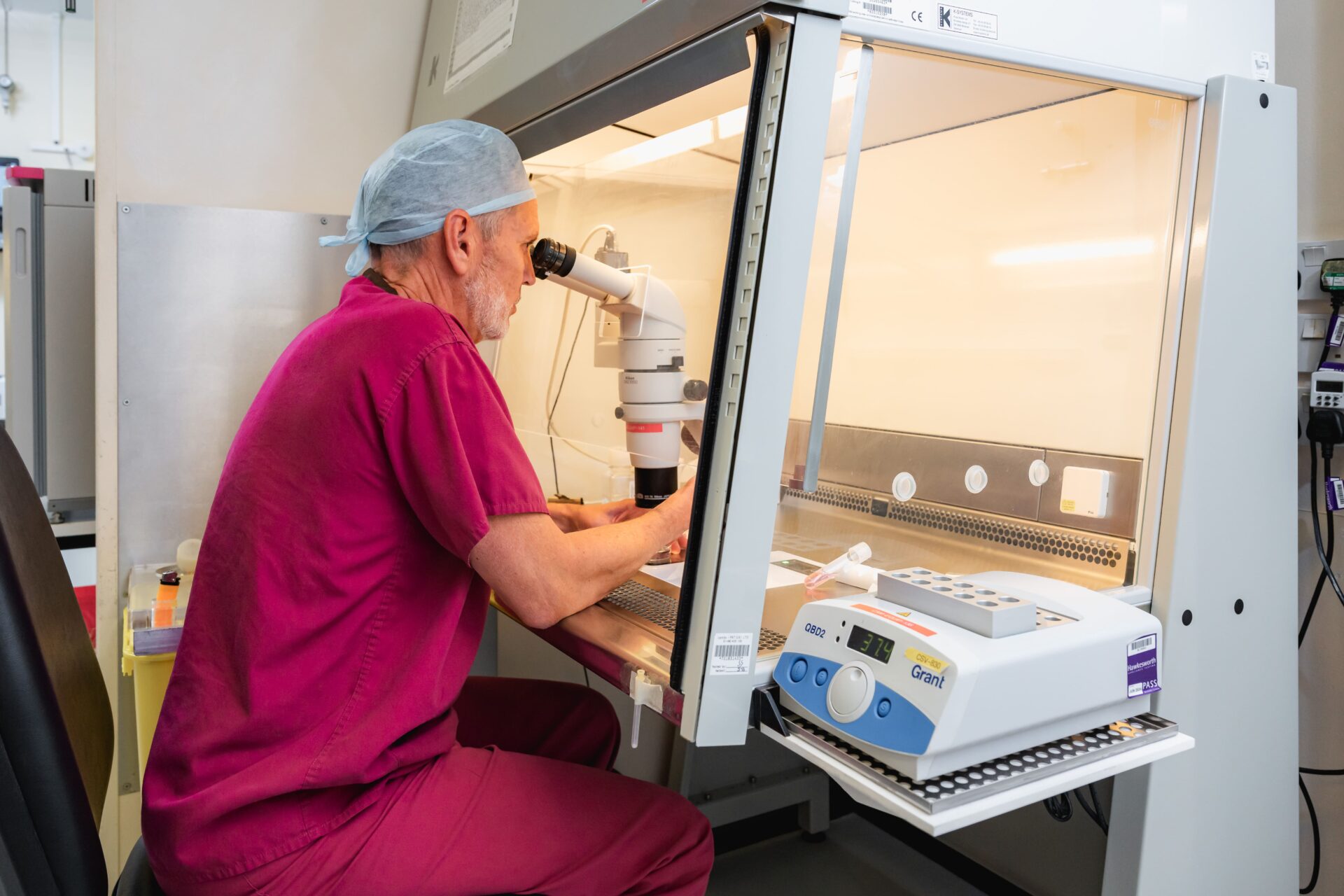
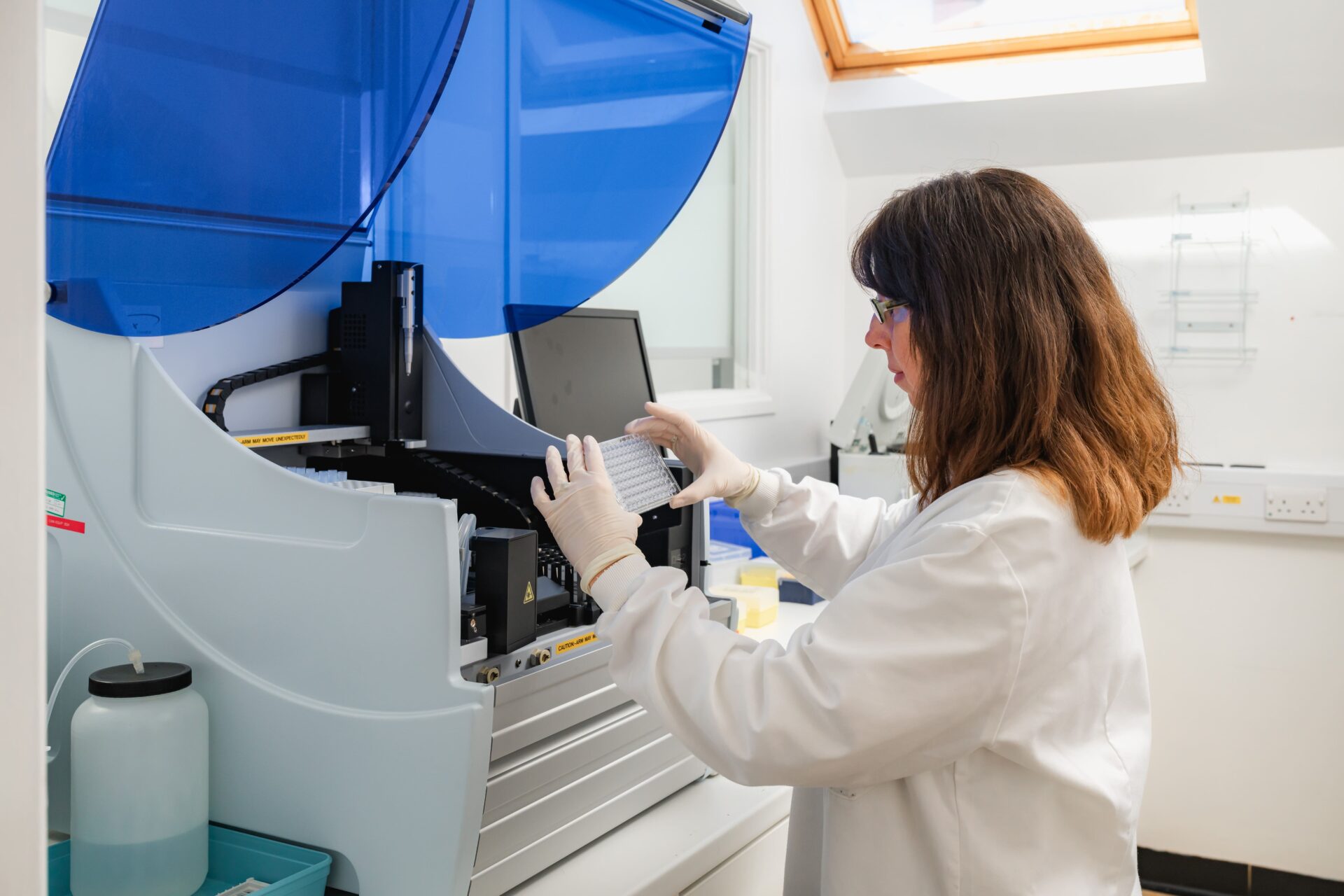
Around five days after fertilisation, the embryo naturally begins to form two parts – one that will develop into the baby, and another that will form the placenta. At this stage, a very small number of cells that would become the placenta are gently removed. These cells are then carefully examined in the laboratory to check whether the embryo has the expected pattern of chromosomes.
This information helps your specialist identify which embryos have the strongest chance of leading to a successful pregnancy. More importantly, it helps to identify the ones who are extremely unlikely to become babies and, therefore, should not be transferred in the first place. Many people find that having this insight brings clarity and reassurance as they plan their next steps.
Why choose us for your PGT-A testing?
As the world’s first IVF clinic, Bourn Hall brings decades of experience in embryo care and genetic screening, combining expertise with precision to give you the best insight into your embryos’ potential.
We have designed our PGT-A pathway with priority on quality. We are working with a genetic lab that has a strong record of peer-reviewed published results and a proven track record of high performance and accuracy.
We are also aware that PGT-A, as an HFEA add-on, should be offered ethically, transparently and with plenty of counselling, to ensure that you feel empowered to decide if and when it is right for you. It is not our attitude to promote PGT-A for everyone, and we strongly believe in working together with you to support you in making the best, informed decisions around your journey.
From your very first consultation, you’ll receive personalised guidance from specialists who take the time to understand your unique circumstances and goals. Our embryologists use advanced laboratory techniques, and our clinicians explain your results with kindness and clarity, helping you make informed decisions about your fertility treatment.
We’re committed to compassionate, patient-centred care and will be with you throughout your journey. Our team provides reassurance, expert knowledge and a supportive environment where you can ask questions and explore your options.
Is PGT-A right for me?
Every person creates a mix of embryos, some with the usual pattern of genetic information and others with changes that may affect how well they develop. These changes become more common as we get older, which is why embryos created in the late thirties and forties may be less likely to lead to a successful pregnancy. Because you can’t tell this by appearance alone, PGT-A can offer more insight to make informed decisions about your fertility journey.
You might consider PGT-A for any of these reasons:
Recurrent miscarriage
Experiencing more than one miscarriage, whether naturally or during IVF, can be distressing and challenging. PGT-A may help identify embryos with the strongest chance of healthy development, offering a clearer understanding of whether embryo health may be contributing.
PGT-A does not change the quality of embryos, but it can help identify the ones with the strongest potential, offering reassurance and confidence as you move forward.
Repeated implantation failure
Repeated implantation failure occurs when good-quality embryos have been transferred across several IVF cycles, but pregnancy has not developed. Sometimes the reason is unclear. PGT-A may help by identifying embryo-genetic reasons for failed implantation. By avoiding the transfer of genetically abnormal embryos, it addresses at least partly the difficulty at hand.
Advanced maternal age
As we get older, both the number and quality of eggs naturally decrease. This is a normal part of ageing that becomes more noticeable from the mid-thirties onward. During this time, a higher proportion of embryos may have genetic flaws. PGT-A may provide valuable insight into which embryos are most likely to develop well.
Couples having a single embryo transfer
For those who prefer, or are advised, to transfer one embryo at a time, PGT-A can help select the embryo with the greatest chance of success. Having embryos with high potential available removes the pressure to transfer two embryos together, which would come with risks from having twins or more. Multiple pregnancies are notoriously higher-risk and are far more likely to occur after transferring two embryos together. This approach supports long-term family-building plans and may reduce the number of transfers needed, helping make the process more focused.


What next?
Once you decide to move forward, PGT-A is carried out as part of an IVF or intracytoplasmic sperm injection (ICSI) cycle.
Your ovaries are stimulated to produce eggs, which are then collected and fertilised in the laboratory. The embryos are grown to the blastocyst stage – the point at which a few cells can be safely and gently removed for testing.
Embryos found to have the expected pattern of genetic information are carefully frozen and stored for future transfer. Your specialist will guide you through the process, including the results of the biopsy of your individual embryos. They will also provide you with detailed advice on timing and support to help optimise healthy embryo development, from the testing to the day of transfer.
After your embryo transfer, you’ll take a pregnancy test two weeks later. If positive, you’ll return to Bourn Hall for a pregnancy scan at around 35 days. Our team will continue to support you with care and reassurance every step of the way.
Book your PGT-A testing consultation today
If you’re considering PGT-A testing, your first step is a consultation with one of our fertility specialists. This is an opportunity to discuss your circumstances, ask questions and explore whether PGT-A is the right choice for you.
Flexible Pricing Options
To help make your treatment affordable and achievable, we offer fixed price treatment package options and a variety of finance solutions for patients looking to spread all or part of the cost of their treatment.
Explore our prices
Discover our prices and finance options, making treatments more accessible for you.
Book a 15 minute Discovery call
Schedule a Discovery call to find out which tests and treatments are right for you.
Fertility funding partners we work with:


We’re incredibly proud of our success rates
At Bourn Hall, you can be assured of the best chances of having a baby within the shortest possible time. If you are under 35, you have a 73%* chance of falling pregnant within one year.
*Data from 2021

Younger than 35
If you are under 35, you have a 73% chance of falling pregnant within one year.

35 to 39 years old
If you are 35-37 years old and you continue treatment with Bourn Hall, you have a 63% (50% for 38-39 year olds) chance of getting pregnant (pregnancy seen on scan) within one year.

40+ years old
If you are a female aged over 40 and you continue treatment with Bourn Hall, you have about a 25% chance of getting pregnant within one year.
We provide world-class support throughout the fertility journey.
As one of the UK’s top fertility treatment centres, our values ensure we put our patients first.

Passion

Adaptability

Commitment

Teamwork and Collaboration
Our excellence in fertility treatment

1978
The world's first IVF baby

1980
Year founded by IVF pioneers

25000
Babies born through Bourn Hall

Patient reviews you can trust
Genuine experiences from real patients. See why so many trust us with their fertility care.

“We went to an open evening at Bourn Hall Wickford and came away feeling really positive about the place. The staff were really friendly and the presentation was clear about the statistics regarding success rates and live birth rates; their data was very transparent. We came away feeling like we would really be looked after.”
Katy and Leigh are parents to Charlie after IVF
Patient 2023
“We chose to make an appointment at Bourn Hall Wickford because of the favourable reviews. When we got there and met the staff they were just so lovely, making us feel welcome and explaining to us what tests would need to be done and what our options were; we just thought ‘yes, let’s get the ball rolling!”
Jess and Fran are mums to Nathan after IVF with donor sperm
Patient 2023
Your Stories
Our patients are at the heart of everything we do, and we are always inspired by the success stories they have to share. Hear directly from our previous patients as they share their unique journeys to parenthood.

From Challenges to Joy
Every fertility journey is different, and for Kim and her husband, the path to parenthood brought both…

Sophie’s Journey to Motherhood: Becoming a Solo Mum with Donor Treatment
At Bourn Hall, we’re privileged to support people on every path to parenthood. Today, we’re sharing Sophie’s…

Everything Happens for a Reason: Laura and Kevin’s Journey
Sometimes, life takes an unexpected turn that changes everything. When Laura discovered a lump and was diagnosed…
Our Fertility Events
Join our experts at a range of events including support groups, webinars and open evenings.
Learn more about the options available to you, from fertility tests to treatments, and find answers to any questions you might have.








Related Content
If you qualify for NHS-funded fertility treatment under the NHS Norfolk and Waveney Integrated Care Board, our fertility diagnostic pathway is the same as the services offered by your local NHS hospital but with much shorter waiting times and in an environment dedicated to fertility services.
Our male couples fertility testing package includes semen analysis tests for you both, a free 30-minute consultation with our fertility nutritionist and a private consultation.
We offer fertility health and wellbeing packages at our clinics in Cambridge, Norwich, Wickford, or at home. Our male package includes a semen analysis, a free 30-minute consultation with our fertility nutritionist, and personalised doctor-written report explaining your results.
Our female couples fertility testing package includes options to provide you both with results on your fertility. These include AMH blood tests for ovarian reserve; TSH to assess your thyroid stimulating hormone; an ultrasound scan; and personalised doctor-written report explaining your results.
Our female package includes the option of AMH blood tests for ovarian reserve; TSH to assess your thyroid stimulating hormone, an ultrasound scan; and personalised doctor-written report explaining your results. Additionally, we include a free 30-minute consultation with our fertility nutritionist to provide you with nutrition and lifestyle advice.
For heterosexual couples, our female and male fertility testing package includes the option of semen analysis; AMH blood tests for ovarian reserve; TSH to assess your thyroid stimulating hormone; ultrasound scan; and personalised doctor-written report explaining your results.
Once you’ve made the decision to extend your family, even thinking that you might have a fertility issue can be stressful. And for a man, the thought that your sperm might not be in tip-top condition is definitely a cause for concern.
Frequently asked questions
Your questions answered. Find clarity on every step of your fertility journey.