
Embryo freezing
From our IVF fertility clinics in Cambridge, Colchester, Norwich and Wickford, embryo freezing treatment can help you to keep your options open for the future.
If you are facing medical treatment that could compromise your fertility, embryo freezing allows you to still have the option of having a child of your own in the future.

Page Guide
We understand that fertility treatment can be a complex and emotional journey. Our team is dedicated to providing you with all the information and support you need throughout the process.
How it works

Preserving your fertility
When fresh embryos are transferred during an IVF cycle, any additional embryos created – but not transferred – are often frozen.
However, what we mean here is a specific treatment that involves entering an IVF cycle with the express intention of freezing all the resulting embryos. These can be stored for your future use for up to 55 years.
Is it right for me?
If you’re a woman, embryo freezing may be an option when you’re facing surgery or cancer therapies that could affect your ability to produce healthy eggs in the future. Of course, there has to be enough time before these therapies begin to create the embryos, either with the sperm of your partner or a donor.
Our medical team at each of our clinics in Cambridge, Colchester, Norwich and Wickford will liaise with your specialist to ensure that the embryo freezing treatment is safe for you, and not detrimental to your medical condition.
If you are a man in similar circumstances, we recommend sperm freezing – a proven and successful technique that can be completed more quickly and is much easier for you than undergoing a full IVF cycle.
There may be other circumstances where embryo freezing is also appropriate, and you can discuss these with one of our fertility specialist doctors.


What happens next
Your treatment cycle is exactly the same as it is for IVF. The only difference is that all your embryos will be frozen at the optimum time – an assessment made by our clinics’ embryologists – rather than transferred to your uterus.
If your embryos are frozen and stored by us, we’ll contact you each year and ask you to confirm your wishes for the next 12 months. If you wish to continue storage with us, there is an annual storage fee.
Flexible Pricing Options
To help make your treatment affordable and achievable, we offer fixed price treatment package options and a variety of finance solutions for patients looking to spread all or part of the cost of their treatment.
Explore our prices
Discover our prices and finance options, making treatments more accessible for you.
Book a 15 minute Discovery call
Schedule a Discovery call to find out which tests and treatments are right for you.
Fertility funding partners we work with:


Our IVF success rates
At Bourn Hall, you can be assured of the best chances of having a baby within the shortest possible time. If you are under 35, you have a 72% chance of falling pregnant within one year.
*Data from 2025
If you are under 35, you have a 72% chance of falling pregnant within one year.
If you are 35-37 years old and you continue treatment with Bourn Hall, you have a 64% chance of getting pregnant within one year.
If you are a female aged over 40 and you continue treatment with Bourn Hall, you have about a 50% chance of getting pregnant within one year.
Success rates by age
At Bourn Hall, you can be assured of the best chances of having a baby within the shortest possible time. If you are under 35, you have a 72% chance of falling pregnant within one year.
*Data from 2025

Younger than 35
If you are under 35, you have a 72% chance of falling pregnant within one year.

35 to 39 years old
If you are 35-37 years old and you continue treatment with Bourn Hall, you have a 64% (58% for 38-39 year olds) chance of getting pregnant (pregnancy seen on scan) within one year.

40+ years old
If you are a female over 40 and you continue treatment with Bourn Hall, you have about a 50% chance of getting pregnant within one year.
Support at every stage
As one of the UK’s top fertility treatment centres, our values ensure we put our patients first.

Passion

Adaptability

Commitment

Teamwork and Collaboration
Our fertility milestones

1978
The world's first IVF baby

1980
Year founded by IVF pioneers

25000
Babies born through Bourn Hall

Patient reviews
Genuine experiences from real patients. See why so many trust us with their fertility care.

“We went to an open evening at Bourn Hall Wickford and came away feeling really positive about the place. The staff were really friendly and the presentation was clear about the statistics regarding success rates and live birth rates; their data was very transparent. We came away feeling like we would really be looked after.”
Katy and Leigh are parents to Charlie after IVF
Patient 2023
“We chose to make an appointment at Bourn Hall Wickford because of the favourable reviews. When we got there and met the staff they were just so lovely, making us feel welcome and explaining to us what tests would need to be done and what our options were; we just thought ‘yes, let’s get the ball rolling!”
Jess and Fran are mums to Nathan after IVF with donor sperm
Patient 2023
Patient stories
Our patients are at the heart of everything we do, and we are always inspired by the success stories they have to share. Hear directly from our previous patients as they share their unique journeys to parenthood.
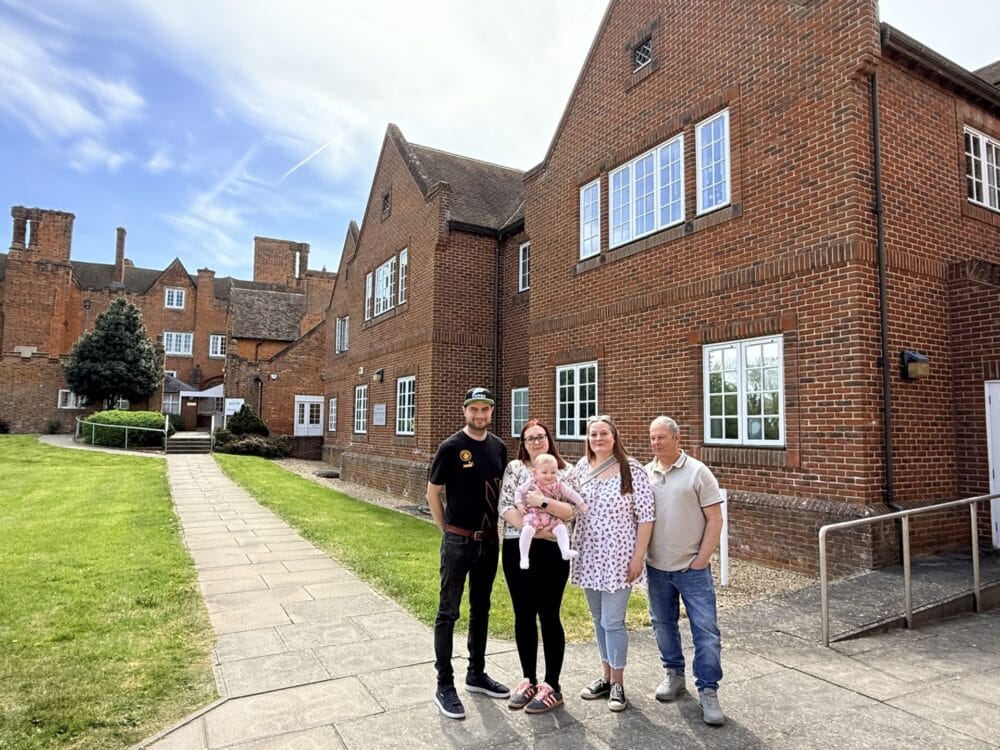
April & Giacomo’s Fertility Journey: Overcoming Male Factor Infertility Challenges
April and Giacomo’s journey to parenthood was filled with uncertainty, waiting, and emotional challenges, but throughout it…

From Challenges to Joy
Every fertility journey is different, and for Kim and her husband, the path to parenthood brought both…

Sophie’s Journey to Motherhood: Becoming a Solo Mum with Donor Treatment
At Bourn Hall, we’re privileged to support people on every path to parenthood. Today, we’re sharing Sophie’s…
Upcoming fertility events
Join our experts at a range of events including support groups, webinars and open evenings.
Learn more about the options available to you, from fertility tests to treatments, and find answers to any questions you might have.





Related information
If you qualify for NHS-funded fertility treatment under the NHS Norfolk and Waveney Integrated Care Board, our fertility diagnostic pathway is the same as the services offered by your local NHS hospital but with much shorter waiting times and in an environment dedicated to fertility services.
Our male couples fertility testing package includes semen analysis tests for you both, a free 30-minute consultation with our fertility nutritionist and a private consultation.
We offer fertility health and wellbeing packages at our clinics in Cambridge, Norwich, Wickford, or at home. Our male package includes a semen analysis, a free 30-minute consultation with our fertility nutritionist, and personalised doctor-written report explaining your results.
Our female couples fertility testing package includes options to provide you both with results on your fertility. These include AMH blood tests for ovarian reserve; TSH to assess your thyroid stimulating hormone; an ultrasound scan; and personalised doctor-written report explaining your results.
Our female package includes the option of AMH blood tests for ovarian reserve; TSH to assess your thyroid stimulating hormone, an ultrasound scan; and personalised doctor-written report explaining your results. Additionally, we include a free 30-minute consultation with our fertility nutritionist to provide you with nutrition and lifestyle advice.
For heterosexual couples, our female and male fertility testing package includes the option of semen analysis; AMH blood tests for ovarian reserve; TSH to assess your thyroid stimulating hormone; ultrasound scan; and personalised doctor-written report explaining your results.
Once you’ve made the decision to extend your family, even thinking that you might have a fertility issue can be stressful. And for a man, the thought that your sperm might not be in tip-top condition is definitely a cause for concern.
Frequently asked questions
Your questions answered. Find clarity on every step of your fertility journey.
Yes, this is a service we’re able to provide. Egg and/or embryo freezing and storage is available at our full-service clinics in Cambridge, Norwich and Wickford.
Egg freezing can offer you a way to preserve your eggs if you are facing medical treatment that could compromise your future fertility, or you are not ready to become pregnant just now but wish to bank some of your eggs for future use. A cycle of egg freezing involves the same treatment as for conventional IVF, except the eggs are not fertilised or transferred. The eggs that are mature enough for this process are frozen on the same day as your egg collection.
When fresh embryos are transferred during an IVF cycle, any additional embryos created – but not transferred – are often frozen. However, what we mean here is a specific treatment that involves entering an IVF cycle with the express intention of freezing all the resulting embryos. Fertility patients will now be able to store their frozen embryos, sperm and eggs for up to 55 years following a change in the law (1 July 2022). Previously storage was for just ten years.
The cost of fertility preservation treatment varies. More information can be found on our fees and funding page or via our fee calculator.
Some people are prescribed Buserelin as part of a medicated FET cycle, usually before starting oestrogen and sometimes for a short time after. Whether it’s right for you will depend on your personalised treatment plan, which your nurse coordinator will explain in detail. If you’re unsure or have any concerns about medication, our friendly nursing team is always here to talk things through with you.
This depends on the stage of your embryos (when they were frozen) and on how many embryos you wish to be transferred. If you have cleaved embryos (frozen on day two or day three) or blastocysts (frozen on day five or day six), then we will thaw your embryos until there are enough surviving to meet the required amount for transfer.
If your embryos were frozen at the pronucleate stage (frozen on day one), then we will continue to thaw them until we have double the number that you need for transfer. For example, if you want two embryos transferred, we will thaw embryos until we have four surviving. This is because this stage of embryo still has to divide and, hopefully, it will allow you to have two good-quality embryos available for transfer.
Not all embryos or blastocysts will survive the freezing and thawing procedure, however. Our current thawing survival rate is approximately 80%.
We recommend that we thaw all your frozen embryos, as it is likely that some of them will not survive the procedure. The more embryos you have available for culture after thawing, the more likely it is that you will have some good-quality blastocysts at the time of transfer.
Approximately 60% of all embryos in extended culture in our laboratory will successfully reach the blastocyst stage. However, not all of the blastocysts will be of top quality.
For an embryo or blastocyst to have a realistic chance of surviving the freezing and thawing procedures, it must have developed to the right stage and be of suitable quality. Some embryos won’t make it to the correct stage of development, or they may be of substandard quality, which is why we might not be able to freeze them.